Profile
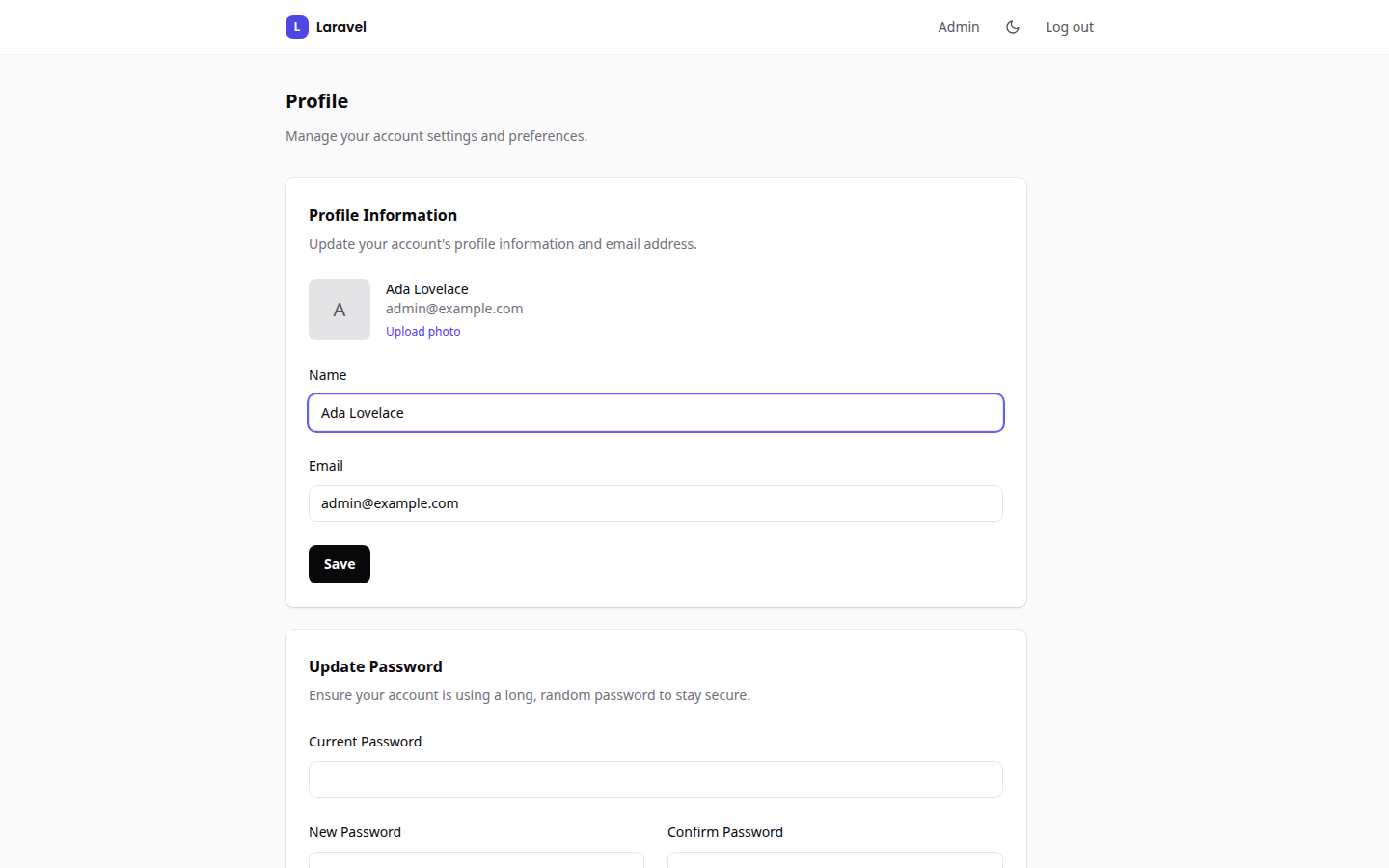
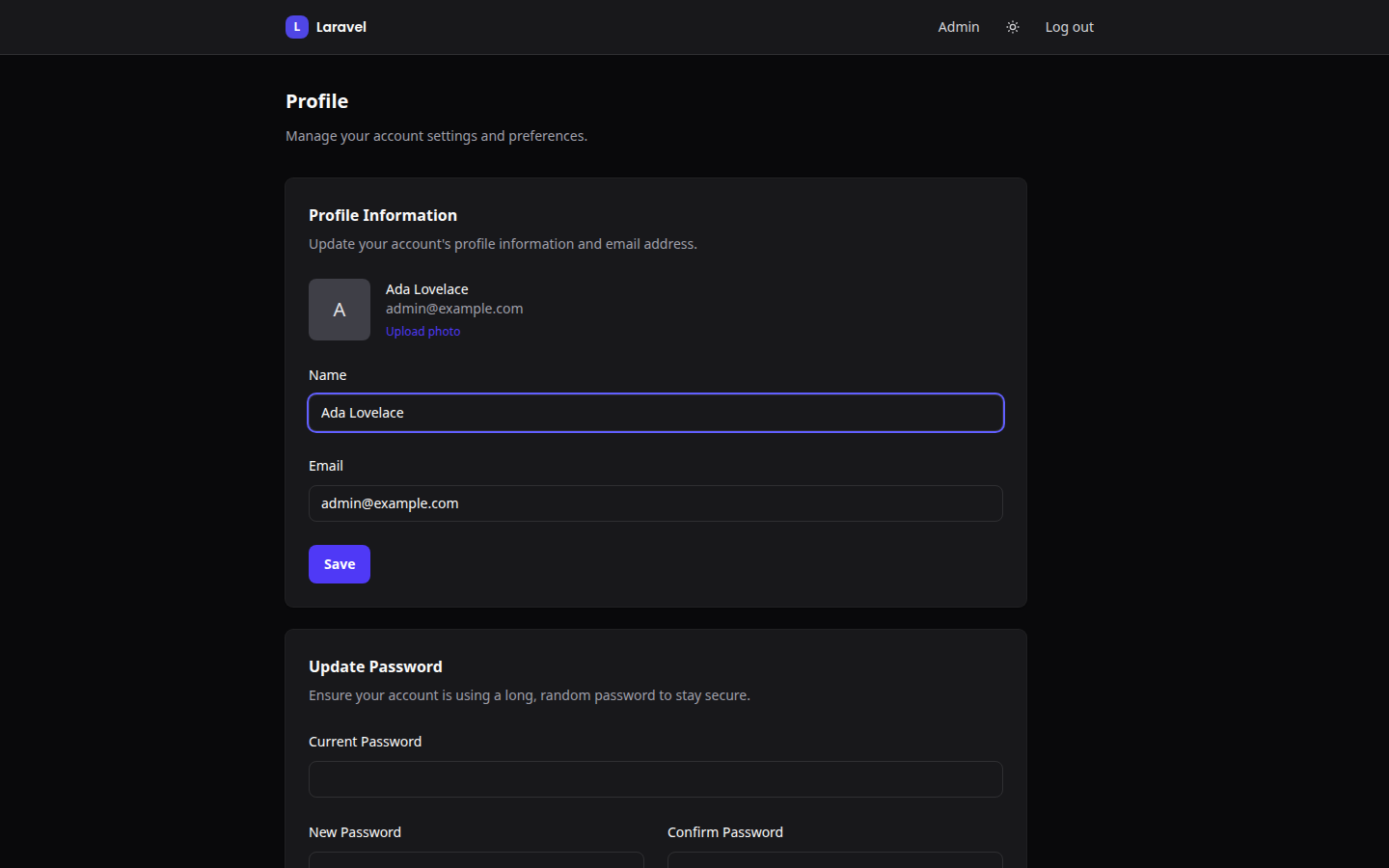
A /profile page for every signed-in user: update name, email and avatar, change the password, manage two-factor authentication, delete the account. It renders in the user shell, not the admin shell.
What it adds
| File | Purpose |
|---|---|
app/Livewire/Profile/ProfilePage.php and the views under resources/views/livewire/profile/ | The page and its four cards |
app/Livewire/Actions/Logout.php | Used by the delete-account flow |
database/migrations/*_add_avatar_path_to_users_table.php | |
resources/views/components/modal.blade.php, action-message.blade.php | Used by the cards |
TwoFactorAuthenticatable in app/Models/Concerns/UiKitUser.php | Added to the generated trait |
Install
php artisan ui-kit:install-module profile
No required Composer packages. composer require intervention/image turns on automatic 200 by 200 avatar resizing; without it the upload is stored as sent.
What the installer changes
- Adds the
/profileroute between the markers inroutes/ui-kit-user.php. - Runs the avatar migration and
php artisan storage:link, which the avatar upload needs. - Regenerates the
UiKitUsertrait withTwoFactorAuthenticatableand re-applies it.
Routes
| Route | Name |
|---|---|
GET /profile | profile |
Two-factor authentication
The card drives Fortify's actions end to end:
- Enable generates a secret and shows the QR code.
- Confirm, when Fortify's
confirmoption is on, asks for a code from the authenticator before the secret counts. - Recovery codes are shown and can be regenerated.
- Disable removes the secret.
From the next sign-in the core login flow stages the challenge described under Core.
Avatars
Uploads are stored on the public disk under a content-derived extension and the path is saved in users.avatar_path. ui-kit:doctor fails storage linked (profile avatars) when public/storage is missing.
Removing
Delete the Livewire components, views and the two Blade components, remove the route line between the user-route markers, roll back the avatar migration, remove TwoFactorAuthenticatable from the trait, and remove profile from installed_modules.